






Our Fight for Sexual and Reproductive Health and Rights (SRHR)
Fighting cervical cancer:
MdM resource center
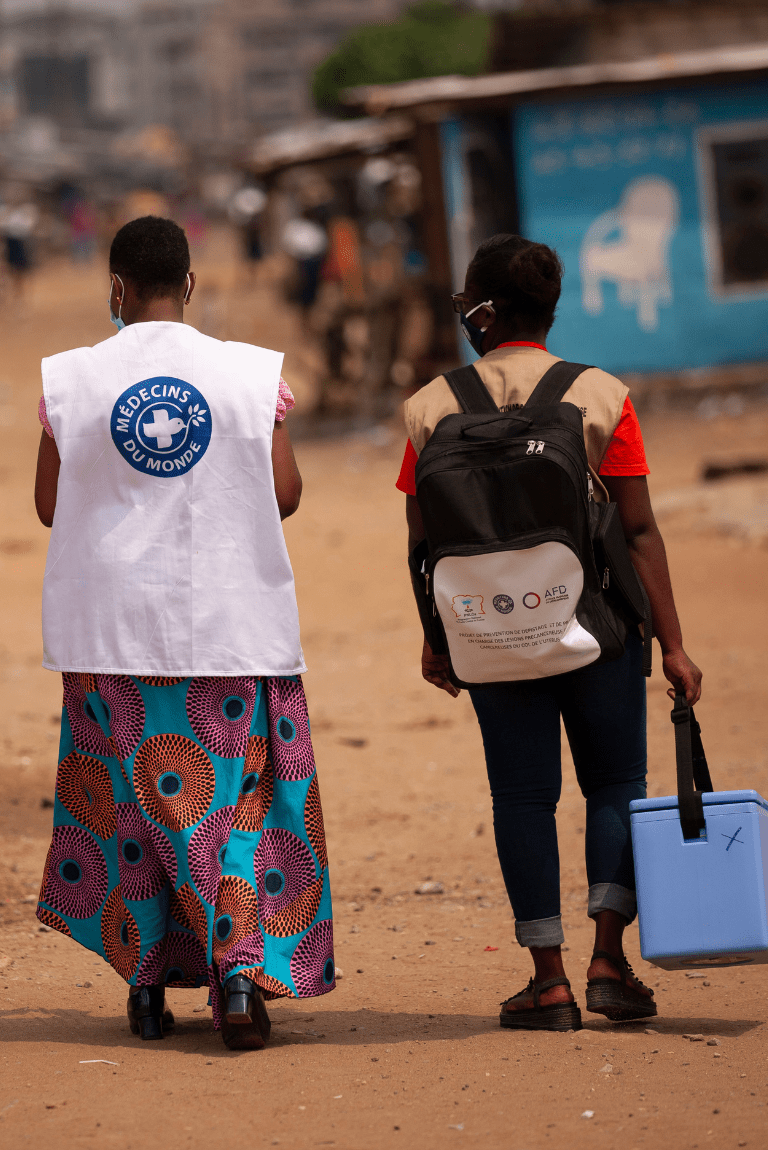
For over 10 years, Médecins du Monde has been waging a fierce battle against cervical cancer a gender injustice that primarily affects the most vulnerable women, both in France and in low- and middle-income countries.
Our objective is imperative: to reach the WHO‘s 90-70-90 targets to ensure that every woman, regardless of her social or geographical status, has effective access to screening and care.
By coordinating the action of our field teams and local health actors with the expertise of CSOs and ministerial representatives, supported by the rigorous scientific guidance of our academic partners, we lead a determined implementation strategy. By placing innovation notably HPV testing and self-sampling at the heart of our approach, we transform our work into concrete levers to break down structural inequalities.
Our commitment is not limited to research: it aims to advocate for evidence-based public recommendations so that screening and treatment become universal rights, ensuring that no one is left behind.
Our 10 Pillars for an Effective Implementation Strategy
These best practices, based on evidence from our research and our experience in the field, guide our interventions to ensure that every woman receives quality screening and care:
- Promote self-sampling: An essential lever for adherence, widely accepted by women, to overcome social and geographical barriers.
- Enhance understanding of results: Clear and personalized counseling increases follow-up rates tenfold and significantly improves adherence to treatment.
- Screen-and-treat in a single visit: Combining HPV testing with immediate treatment ensures over 90% completion of the care pathway and drastically reduces loss to follow-up.
- Synergy with HIV screening and community outreach: Reaching isolated populations by coupling HPV screening with HIV care to engage women who are otherwise disconnected from the health system.
- Prioritize vulnerable populations: Tailoring strategies for migrants, sex workers, and people living with HIV to ensure equity and leave no one behind.
- Community mobilization and awareness: Engaging with communities, men, and patient associations (sexual and reproductive health, STIs, HIV) to overcome social obstacles and taboos.
- Adapt methods to the context: Combining opportunistic screening in urban settings with community-based screening in rural areas to maximize coverage rather than relying on a “one-size-fits-all” model.
- Target priority age groups: Maximizing public health impact by starting with women aged 35–45, with a planned progressive expansion to the 30–49 age range as resources allow.
- Scale up from pilot projects to national level: Establishing inter-ministerial committees to plan, budget, and durably integrate HPV screening into national health systems.
- Strategic Advocacy and Market Shaping: Systematically integrating HPV and self-sampling into national plans (health, HIV, cancer). Implementing market shaping initiatives such as forming regional procurement groups or collective price negotiations to reduce costs, foster local production, and ensure equitable and sustainable access.
Facsheet plaidoyer
Scientific reports
Useful Tools
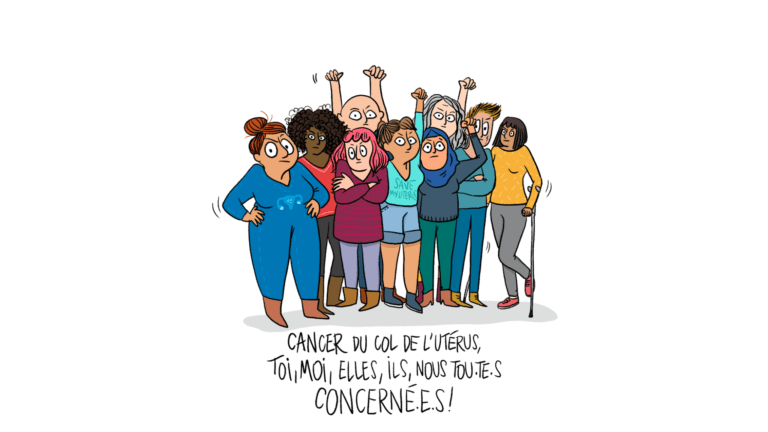
© @mathou
Articles :
- Article (Cairn) – Revue l’Ouest Saharien
- Article (Springer) – Évaluation de l’implémentation
- Article (ResearchGate) – Étude PARACAO
Contact
- For any questions regarding SRHR: Najat Lahmidi, Sexual and Reproductive Health Rights Advisor – Médecins du Monde