


Accessing Healthcare in Hard-to-Reach Communities of Katsina State, Northern Nigeria
2026-08-25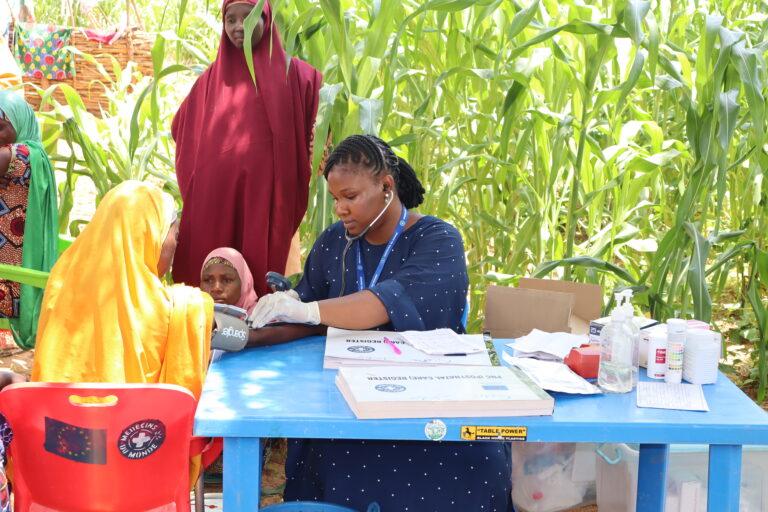
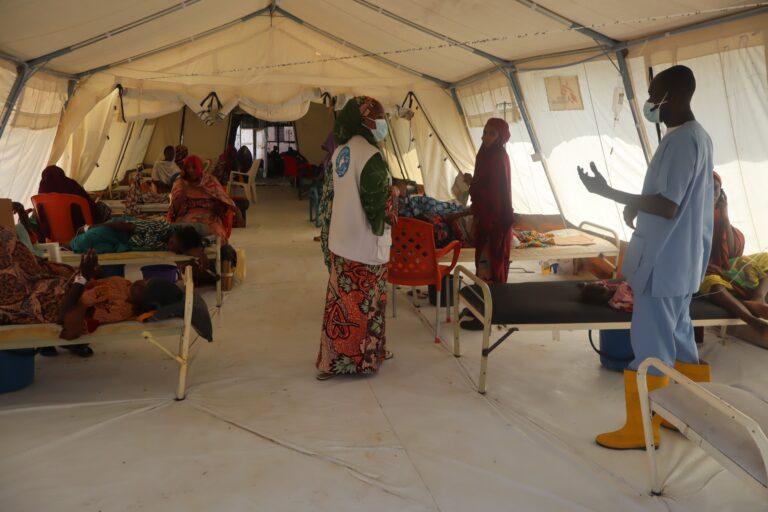
With the support of the European Union Humanitarian Aid (DG ECHO), Médecins du Monde (MdM) is bringing essential healthcare services closer to hard-to-reach and underserved communities in Zango Local Government Area (LGA), Katsina State, northern Nigeria. Through a mobile clinic operating for around four to five months each year, particularly during the rainy season and other periods when access is limited, MdM reaches people who face significant barriers to accessing fixed health facilities. In Katsina, remote and nomadic communities continue to experience long distances to health facilities and inconsistent availability of essential services, leaving many people without timely access to care. The mobile clinic offers a flexible approach to delivering healthcare directly to these communities. Its schedule and locations are coordinated with community leaders, Local Government Area and state health authorities to ensure that services are tailored to local needs.
The mobile team is composed of a doctor, a clinician, a nurse, a midwife, a drug dispenser and an MHPSS/GBV counsellor, ensuring that a range of essential health and support services can be provided directly within the communities reached. During its outreach, the mobile clinic provides outpatient consultations, maternal and child health services, first-line support for survivors of gender-based violence and people experiencing mental health needs, emergency referrals, and health education. Routine immunization is delivered in close collaboration with the Ministry of Health (MoH), whose immunization nurses join the mobile team to vaccinate children and ensure that outreach services are fully integrated into the state immunization system.
This collaboration is particularly important in Katsina, where children living in remote settlements can face substantial barriers to routine vaccination. According to the latest Nigeria Demographic and Health Survey (NDHS), published in September 2024 by the Nigerian MoH, in Katsina, 34.1% of children aged 12–23 months had not received any vaccination, while only 15.1% were fully vaccinated. Among children aged 24–35 months, only 8.5% are fully vaccinated.
The mobile clinic ambulance also facilitates emergency referrals, ensuring that patients in isolated communities can access appropriate health facilities when lifesaving care is needed.
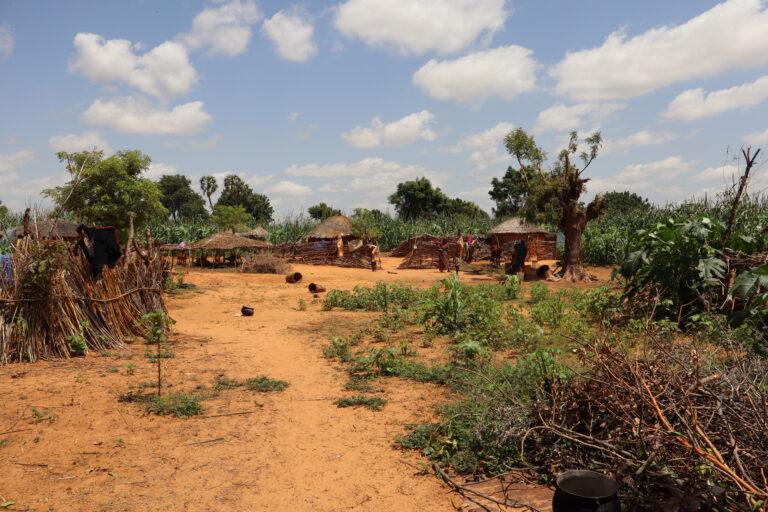
Jaholili Community, Zango LGA, Katsina State, August 2026
Mallam Issa*, 56, is a member of the Jaholili community, named after his father. Today, Médecins du Monde’s mobile clinic is providing healthcare services in his community, in the middle of cornfields. Sitting outside his home, a few metres from where the medical team has set up the clinic, Mallam Issa explains how important this initiative is : the nearest health centre is several kilometres away, and many residents do not have the means or energy to travel there when they are unwell. Today, Mallam Issa has come for a consultation and to collect medication for stomach aches and headaches. Going to the hospital would have taken the whole day, required significant effort and incurred additional costs. Instead, the healthcare services have come to him, free of charge. He is grateful for the support.
Bringing mobile healthcare closer to communities
Ruwaida* travelled with her three-year-old daughter, Habiba, from Walawha, about an hour away. She heard about the mobile clinic through a friend who had attended a community awareness session where information about the outreach was shared.
Habiba who was experiencing a fever, sought medical attention at the mobile clinic. For Ruwaida, this option was much easier than travelling to the hospital, which is further from her home. She says that she rarely goes to the hospital because of the distance.
When she or her children are ill and too weak to make the journey, she often has to wait until they feel better before seeking care. Ruwaida gave birth to both of her children at home for the same reason. Today, she is relieved that Habiba can be seen by a doctor and receive the medication she needs.
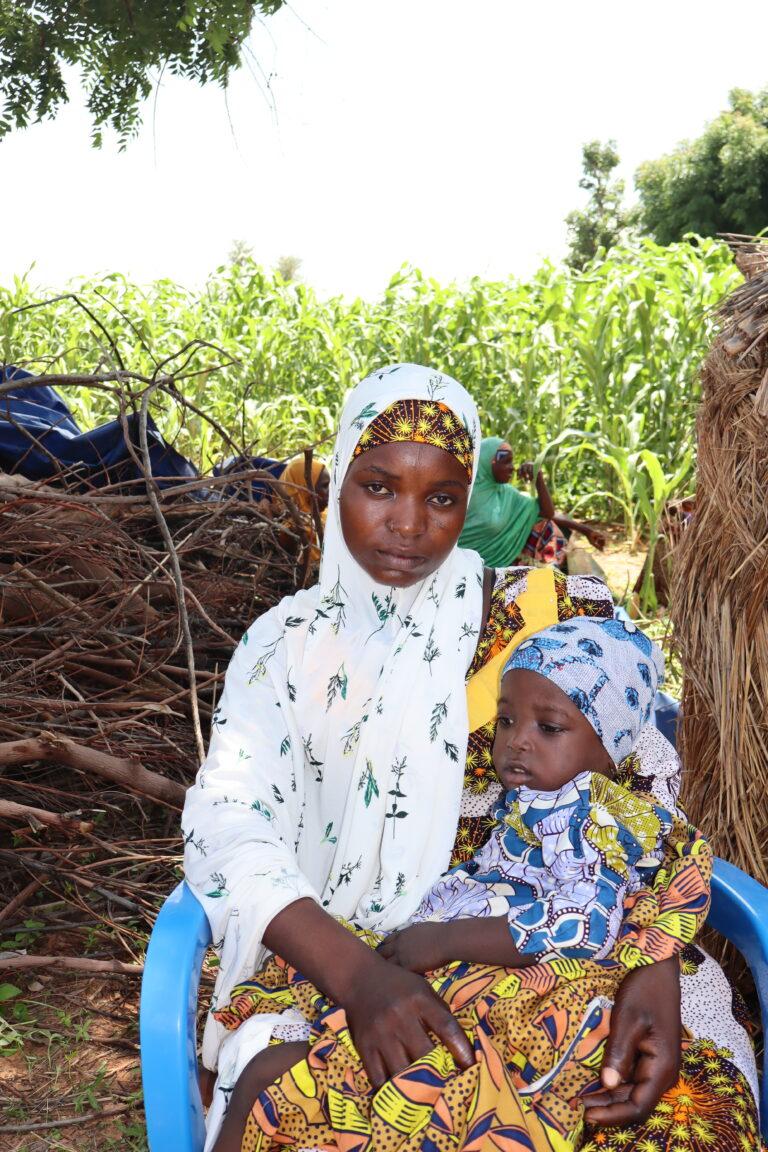
I was afraid for my daughter, she was not feeling well. Now I am relieved
during Mobile Clinic intervention, Zango LGA, Katsina State, August 2026
Dr Musa recently joined Médecins du Monde. Four days a week, he travels with the mobile clinic team across Zango LGA, setting up in a different community each day to provide free healthcare services. He estimates that around 80 people benefit from the mobile clinic each day. Without this service, many of these patients would have limited access to healthcare. For Dr Musa, one of the main challenges is managing the number of patients. When the team arrives in a community in the morning, people are often already waiting for consultations. Managing large crowds with a small medical team can be challenging. Despite this, the team works throughout the day to ensure that everyone is seen, receives medical advice and, when needed, is provided with the appropriate medication.
With the support of European Union Humanitarian Aid (DG ECHO), Médecins du Monde supports seven health facilities across Borno and Katsina States, as well as a mobile clinic in Katsina, bringing essential healthcare closer to thousands of people, including those living in some of the most remote and underserved communities. Through this support, and in close collaboration with local health authorities and communities, MdM ensures that distance and limited access do not prevent people from receiving the care they need.
Names have been changed to protect the identity of the individuals.
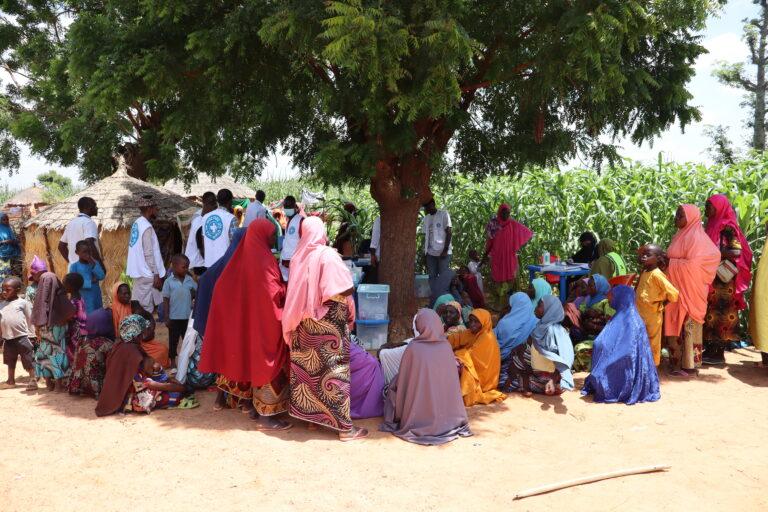
MdM Mobile Clinic intervention, Zango LGA, Katsina State, August 2026