
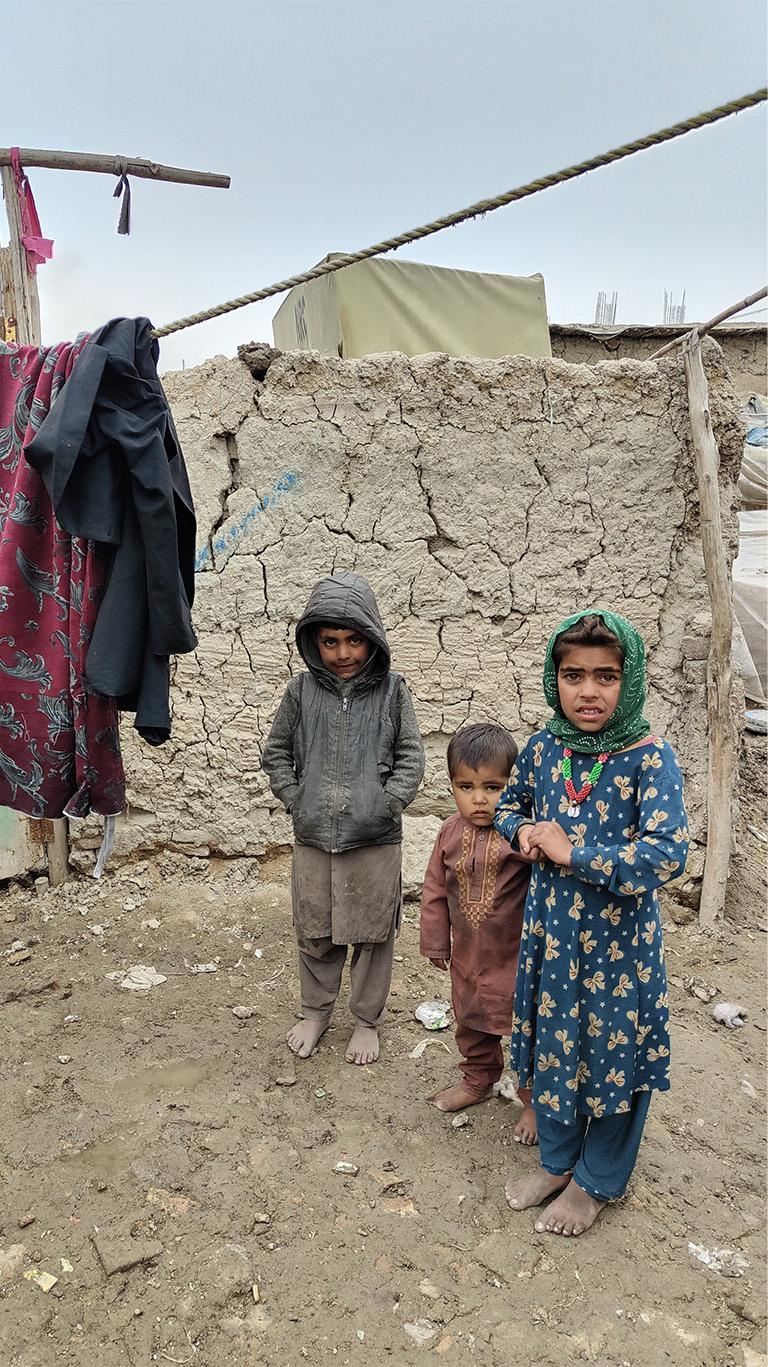
AFGHANISTAN

22.9 MILLION

people in need of humanitarian assistance.

6.3 MILLION

internally displaced people.

14.8 MILLION

people suffering acute food insecurity.

Médecins du Monde’s emergency response includes a range of humanitarian assistance programmes. Find out more about our work in Afghanistan.

THE HUMANITARIAN SITUATION IN AFGHANISTAN

By 2021 the Afghan people had suffered forty years of war and had seen their situation become increasingly catastrophic in the previous few years, with rising hunger, economic decline, high prices for food and other essential items and worsening poverty. They were then confronted with an intensification of the conflict, the withdrawal of international forces and a return to the Taliban running the government.  
Nos combats : urgences et crises

  • Women’s rights under attack

    Restrictions of women’s rights increased significantly in Afghanistan in 2024. In particular, the authorities banned women from entering medical educational institutions, thereby limiting their access to education. Added to this, the prohibition on women receiving care from male healthcare professionals risks more suffering, illness and preventable deaths among women who don’t have access to essential health services.

    Women are also subject to movement restrictions, banned from taking part in sporting activities, excluded from certain public places and are experiencing a rise in gender-based violence. All these measures are having devastating effects on their mental health.

  • A disastrous economic situation

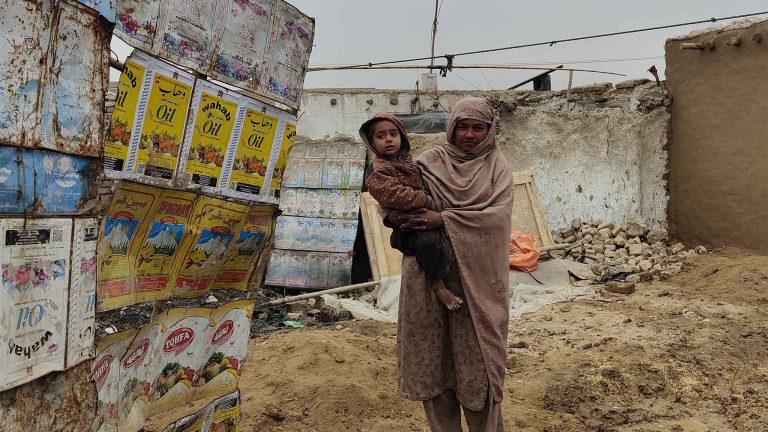
    In 2024, over half the Afghan population was in need of humanitarian assistance. Rising unemployment, falling incomes, increased debt and higher prices for basic products like food and fuel have forced households to reduce their spending on essential services, such as education and healthcare. Rural areas are particularly badly affected by the deteriorating economy and hunger and malnutrition are widespread.

    Furthermore, population growth, internal displacement and higher than usual rates of cross-border returns put increased pressure on limited resources, livelihood opportunities and basic services.

  • The threat of natural disasters

    Afghanistan is one of the countries most at risk from natural disasters, particularly earthquakes, drought and flooding which threaten the survival of around 31 million people whose livelihoods depend on agriculture.

    Water resources are becoming ever more limited due to below average precipitation since 2020. Drought has triggered internal displacements and is also a contributing factor in food insecurity and epidemics. Desertification has affected over 75% of the total area of the country’s northern, western and southern regions over the last forty years, reducing vegetation cover on grazing land, accelerating soil degradation and impacting crops. At the same time, many parts of Afghanistan are regularly hit by flooding, especially in the north and east.

  • A struggling healthcare system

    When the Taliban came to power in 2021, international aid, especially for the health system, was cut. This had far-reaching repercussions, with ongoing epidemics of communicable diseases, unmet maternal and infant health needs and increased levels of malnutrition, contributing to significant mortality and morbidity.

    Winter is harsh in Afghanistan and the most vulnerable groups, particularly children under the age of five and older people, suffer from respiratory infections that spread rapidly, while snow often obstructs access to the few healthcare facilities that are still open and functioning.

    Women and children face innumerable barriers to access to healthcare and mortality rates for mothers and children under five in Afghanistan are the highest in the world.

    As a consequence of this desperate need for protection and against a background of conflict, over half the population is affected by psychosocial distress and one in five people are experiencing changes to their day-to-day functioning as a result of exposure to traumatic events.

HUMANITARIAN ASSISTANCE IN AFGHANISTAN

  • Improving access to primary healthcare in Kabul

    Médecins du Monde is supporting Rahman Mina district hospital as well as two integrated health centres in Kabul. Our work focuses on renovating facilities, providing medical supplies and delivering patient consultations and referrals to the most appropriate services.

    We also offer curative consultations, focusing on antenatal and postnatal care, mental healthcare and psychosocial support, routine vaccination and capacity-building for health workers.

    In 2024, we provided 183,247 general consultations and 5,248 mental health and psychosocial support appointments. We delivered training to 159 healthcare professionals on mental healthcare, psychosocial support and psychological first aid.

  • Tackling malnutrition in Wardak Province

    Wardak Province is a key central province of Afghanistan and Médecins du Monde is now providing financial and technical support to two new health centres and a mobile clinic there, in partnership with a local organisation which works with Kuchi nomadic communities.

    Through these new projects Médecins du Monde has been able to focus on nutrition screening for children under the age of five and pregnant and breastfeeding women and improving access to nutritional treatments. We have delivered training on this topic to 8 healthcare professionals and screened 1,150 children under the age of five for malnutrition.

  • Supporting pregnant women and attending births

    Médecins du Monde is supporting a local Afghan midwives’ association which works within health centres to improve the quality of midwifery services. The work also seeks to increase patient trust, provide better care in the event of complications, increase the number of births attended by qualified staff, reduce mortality rates and establish strong collaborative relationships between midwives and health centres.

    In 2024, skilled staff attended 5,226 births and 3,290 family planning consultations were provided, as well as 13,890 antenatal and 7,547 postnatal consultations.

  • Promoting harm reduction in Kabul

    Médecins du Monde is supporting a community organisation that promotes harm reduction for people who use drugs, including women, and runs drop-in centres in Kabul.

  • 183,247

    Beneficiaries in 2024

183,247

Beneficiaries in 2024

  • LOGO-Centre
  • 50-ans-d-aide-humanitaire