
Health and the environment
in the home

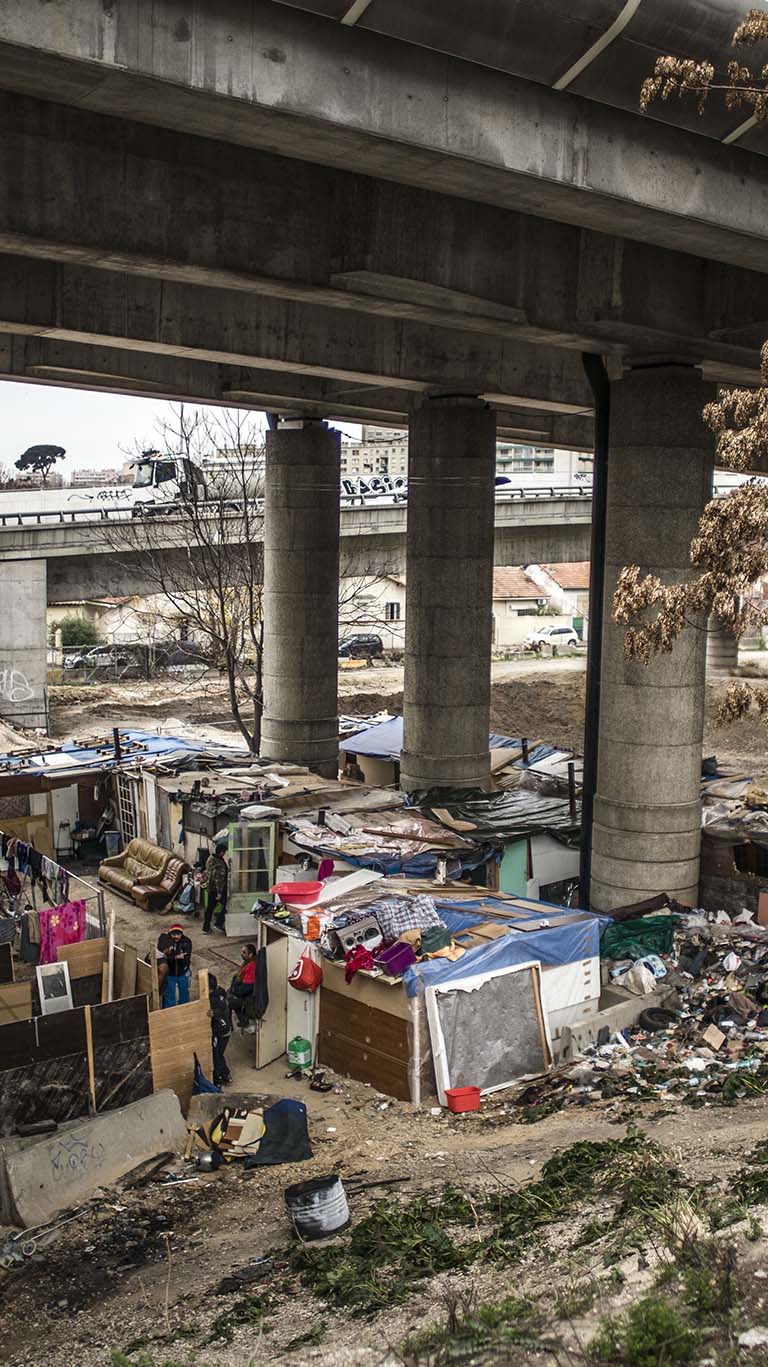
© Olivier Papegnies

Environment and health – Living environments

Housing constitutes a major health determinant:

  • It provides protection and shapes people’s living conditions,
  • It provides a private space that is essential to human well-being and stability.
  • The security it provides is crucial for access to rights, employment, and healthcare.

What kind of actions are carried out by Médecins du Monde?

On the streets and in day centres, our teams support people who are most excluded from healthcare through:

  • Assistance with administrative procedures and access to health rights;
  • Medical outreach, medical consultations, psychosocial support, and health mediation;
  • Information and awareness-raising among medical and social professionals on the issue of housing and precarious living conditions.


Médecins du Monde works in squats and informal settlements to help people access healthcare and rights, or to refer them to appropriate health services, with particular focus on the health of women and children. The organisation’s health mediators work alongside civil society and public service partners to improve the continuity and quality of care. Together with its partners, programme teams also help improve living conditions in squats and informal settlements, so that residents can at least access water, hygiene, and sanitation.

Médecins du Monde highlights the difficulties faced by vulnerable people who are homeless or living in informal settings in exercising their rights and accessing healthcare. Faced with the failure of public authorities to provide sustainable solutions for the hundreds of thousands of people without a home, Médecins du Monde advocates for the right to decent and long-term housing for all as an essential determinant of health, which everyone should be able to access without discrimination. The organisation advocates with public institutions to promote appropriate and sustainable shelter and housing responses, as well as mobile services that can deliver medical and psychosocial support and ensure effective access to care for those who are most excluded.

Médecins du Monde supports slum upgrading policies that fully involve the people concerned and stresses the importance of coordinated solutions and of appropriate, sustainable rehousing options. In the absence of dignified alternatives, and while such solutions are being developed in consultation with residents, the organisation advocates for temporary stabilisation measures and for health protection in living environments.

Learn more

  • Homeless person

    A person experiencing homelessness is someone who does not have stable housing and may be living in makeshift shelters (informal settlements, squats, encampments, etc.) or in emergency accommodation centres. This situation affects millions of people worldwide and is often linked to precarious living conditions, social exclusion, and factors such as job loss, mental health issues, addictions, or domestic violence.

    The causes of homelessness are multiple, including the lack of affordable housing, family breakdown, limited social support, and economic hardships.

  • What is meant by “poor housing”?

    Poor housing encompasses covers all situations in which people live in precarious or unsuitable conditions, including in substandard housing.

    Examples include:

    • Overcrowding: an excessive number of occupants given the available space;
    • Housing that fails to meet minimum standards of decency and comfort (adequate insulation, heating, absence of mold, and access to safe drinking water);
    • Makeshift living environments: squats, informal settlements, encampments…
  • What are the health impacts?

    Living on the streets or in substandard housing can have multiple consequences, including exposure to physical and sexual violence, malnutrition, epidemics, mental health problems, isolation, and skin and respiratory diseases.

    The social exclusion associated with these situations also makes it harder to return to employment and to access healthcare.

    This is what Médecins du Monde’s teams working in squats and informal settlements observe: they see first-hand the impacts extremely precarious housing conditions and repeated evictions have on health. Evictions without rehousing force residents of informal living environments into constant instability, push them further away from the healthcare system, disrupt continuity of care, and make prevention and epidemic control more difficult.

  • What support is available for people living on the streets?

    In France, services such as the 115 emergency hotline, organisations, and emergency accommodation centres provide assistance to people facing severe hardship.

    Bodies such as the Centre Communal d’Action Social (CCAS) and the Services intégrés de l’accueil et de l’orientation (SIAO) help assess a person’s situation and initiate the necessary procedures by referring them to a social worker. The goal is to support people until they can access placement in a social reintegration accommodation centre (CHRS) or housing.

    If no housing solution — whether emergency or longer-term — has been found after two months, people may seek recourse through the enforceable right to shelter (DAHO), either by applying to the local court or through an out of court procedure with the Republic’s mediator.

    Despite the initiatives in place to support people experiencing homelessness, several obstacles continue to limit access to these remedies. One of the main challenges is the sheer volume of requests, which often overwhelms existing services. Administrative barriers and the complexity of the procedures needed to access housing rights and social assistance also further hinder those concerned.