


Humanitarian organizations reaffirm decision to pursue petition before Israel’s High Court of Justice following recent hearing
2026-03-27

© Saeed M. M. T. Jaras Anadolu via AFP
Today, 18 members from a coalition of humanitarian organizations represented by the Association of International Development Agencies (AIDA), have reaffirmed their decision to proceed with a petition before Israel’s High Court of Justice, following the hearing held earlier this week.
The petition was brought by AIDA and a number of other INGOs operating in the occupied Palestinian territory (oPt), following the introduction of a new Israeli registration system which placed dozens of international humanitarian organizations, including many AIDA members, at risk of further restricting their ability to operate in Israel and the oPt. Although applications under the new system were submitied, they remain stalled because of demands for extensive confidential staff data.
Given the severe implications for humanitarian access, AIDA members continue this legal process because they believe the case raises essential questions of law that deserve full judicial consideration. At the hearing, the Court restricted arguments to the narrow issue of data privacy, preventing petitioning organizations from presenting the broader legal and security issues involved, including Israel’s obligations as an occupying power and the legality of measures that could impede humanitarian activity. AIDA members were deeply concerned that the hearing did not provide sufficient space to address these central questions, and that petitioning organisations, as well as diplomats, were not allowed in to the court hearing, while senior Israeli government officials, their entourages and other observers not affiliated with any of the proceedings, were permitied entry and were disruptive.
The State has confirmed that it is requiring the submission of extensive personal data for all staff in Gaza and the West Bank, regardless of any connection to entry into Israel. In a context where hundreds of humanitarian workers have been killed, the compelled transfer of sensitive data without clear safeguards, transparency, or limitations on use creates real risks. It would also breach international data protection standards and the legal obligations of many organizations based in the European Union. This places petitioning organizations in an impossible position, as compliance with these requirements would violate their legal obligations and duty of care, while non-compliance would likely result in the rejection of their petition.
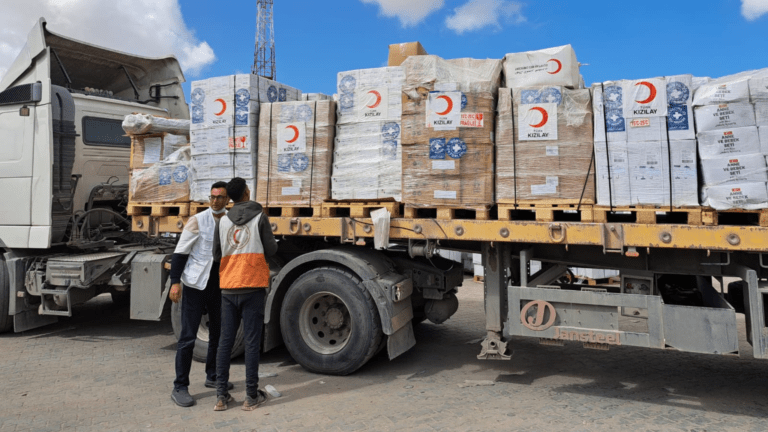
Petitioning organizations stress that they are commitied to doing everything in their power to ensure they can continue to operate in the oPt and continue delivering assistance under Palestinian Authority registration, but they fear that the loss of Israeli registration will further hinder their ability to operate across the territory at a time when humanitarian needs remain overwhelming. INGOs are integral to the response. In Gaza they deliver more than half of all food assistance, support most field hospitals, and provide essential shelter, water, sanitation, nutrition, mine action, and emergency education services. Even while organisations held valid registration, INGOs were blocked from bringing goods into Gaza for over a year and, during the interim period, had requests to deploy international staff into the Strip denied. Any further reduction in operational access would have predictable and even more devastating consequences for civilians.
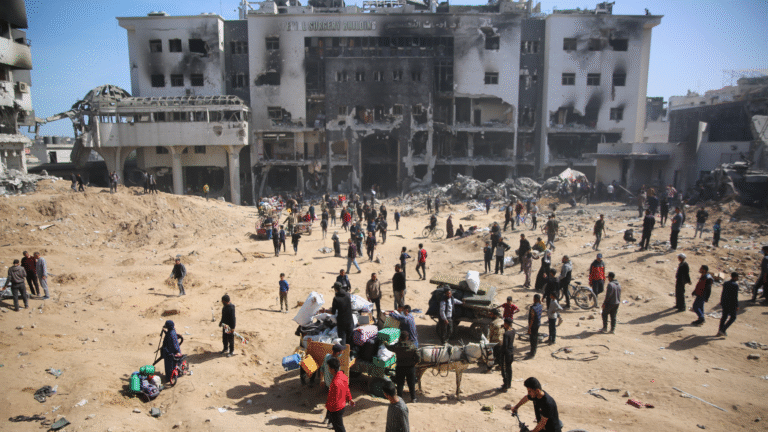
Given the catastrophic conditions in Gaza and the deteriorating situation in the West Bank, including increased setiler violence, rising displacement, and deepening access restrictions.
Humanitarian access must expand rather than contract.
AIDA and petitioning members therefore call on the Israeli authorities to review and adjust the current registration procedures so they do not obstruct humanitarian relief. They also call on donor governments to use all available diplomatic, political, and legal avenues to press for the suspension and reversal of measures that restrict humanitarian access.
Ends
NOTE TO EDITORS ON International Law including IHL, and EU-Israel Treaty Relations
- As an occupying Power, Israel is bound by the Fourth Geneva Convention, which imposes a positive obligation to allow and facilitate relief schemes for the benefit of the protected population (see, in particular, Articles 59 and 63).
- In this framework, humanitarian organizations must be permitied to carry out their activities in accordance with their humanitarian functions, and the occupying Power may not impose changes to their personnel or structure that would undermine those activities.
- Measures that condition the presence or operation of humanitarian organizations on the disclosure of sensitive personal data are inconsistent with this legal framework. Such measures effectively convert a duty to facilitate humanitarian relief into a mechanism of control, which is not provided for under international humanitarian law.
- Furthermore, under international law, the State of Palestine retains sovereign authority to invite, consent to, and oversee humanitarian and development assistance within its territory. This competence is not extinguished by the fact of occupation; rather, it continues to operate alongside -and to limit – the authority of the occupying Power. Is it reflected in Annex III (Protocol Concerning Civil Affairs) of the 1995 Interim Agreement between the State of Israel and the Palestine Liberation Organization (PLO) and reiterated by Israel in its submission to the International Court of Justice in the 2025 advisory proceedings on the presence and activities of intentional organizations.
- As affirmed by the International Court of Justice in its 2024 and 2025 Advisory Opinion, occupation does not confer sovereignty or title, does not displace the sovereign rights of the occupied State, and does not authorize the restructuring of humanitarian space in disregard of the will and needs of the occupied population. Claims that Israel may unilaterally exclude organizations invited by Palestinian authorities, or dictate the terms of their operation irrespective of Palestinian consent, are difficult to reconcile with peremptory norms of international law, including the right to self-determination.
- Article 2 of the EU–Israel Association Agreement elevates respect for human rights and democratic principles to an “essential element” of the relationship. Where a partner State adopts measures that foreseeably compel EU-domiciled entities to act in breach of EU law, including core data protection obligations under the General Data Protection Regulation, it becomes a question of compliance with the normative foundation of the agreement itself.
- EU-based INGOs are bound by GDPR Chapters II and V to ensure that any transfer of personal data is lawful, necessary, proportionate, and subject to enforceable safeguards. Article 48 of the GDPR is explicit in that disclosures pursuant to third-country administrative measures must be grounded in an international agreement or otherwise comply with EU law. A unilateral demand backed by the threat of exclusion from humanitarian operations does not satisfy that standard.
- To place EU entities in a position where compliance with one legal regime necessitates violation of another is, from the EU’s perspective, an interference with the effectiveness of its own law. That interference feeds directly into the doctrine of good faith performance of treaties, codified in Vienna Convenon on the Law of Treaties, Articles 26 and 27. Parties must perform treaties in good faith and may not invoke internal law as justification for failure to perform. While Israel is not bound to apply EU law as such, it is bound, within the framework of the Association Agreement, to conduct itself in a manner that does not defeat the object and purpose of the treaty or render its partner’s legal obligations inoperable in practice. Measures that systematically force EU-regulated actors into noncompliance with EU law, as a condition of accessing occupied territory for humanitarian work, risk crossing that line.
Palestine