


Health and the environment in the home
Health and environment
at work
© Lam Duc Hien
Environmental and health and working conditions
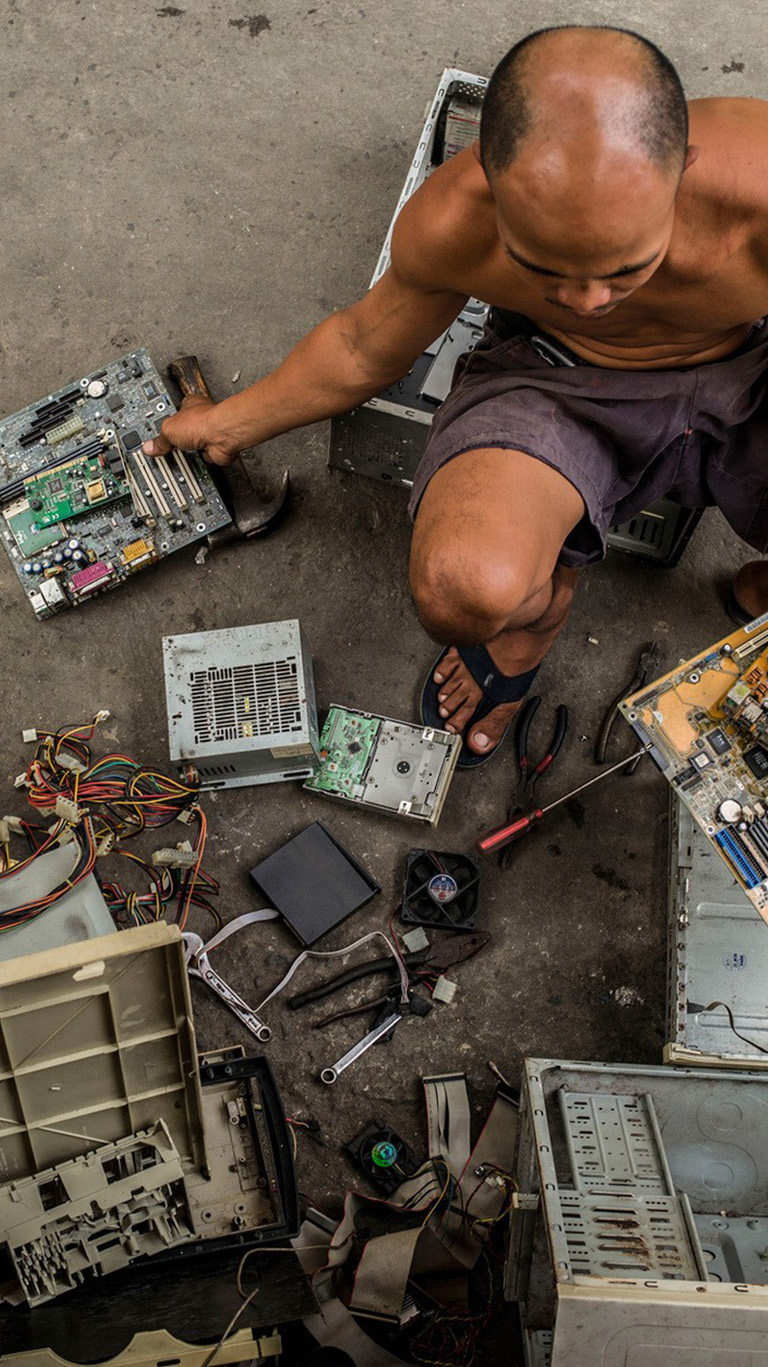
Working conditions, whether formal or informal, can have harmful effects on people’s health. Through several programmes in France and internationally, Médecins du Monde works alongside the most vulnerable workers, whose working conditions directly affect their health.
What is meant by “harmful working conditions”?
Harmful working conditions refer to occupational situations or environments that may have adverse effects on workers’ physical or mental health, for example:
- Exposure to toxic substances such as pesticides, heavy metals, or lead;
- Lack of preventive measures aimed at protecting workers’ physical integrity;
- Physical strain that may lead to musculoskeletal disorders;
- Job insecurity, which exposes workers to dangerous situations and increases risks to their health and well-being.
Recognising these conditions makes it possible to implement specific measures to reduce these risks and improve quality of life at work.
What is meant by “informal” work?
Informal work refers to any economic activity carried out outside the legal and regulatory framework established by the State. Informal workers – often in highly precarious situations – are not protected by occupational health legislation and do not benefit from health coverage.
This instability exposes them to major occupational risks, without effective means of protection.
What are the health impacts of working conditions?
Harmful working conditions can have a wide range of effects, from immediate physical disorders to chronic illnesses, as well as significant psychological consequences.
These risks are often compounded by precarious living conditions and the lack of social protection.
Workers exposed to hazardous environments may develop:
- Musculoskeletal disorders caused by prolonged postures or intense physical exertion;
- Stress and anxiety linked to irregular income and insecure employment;
- Respiratory diseases, skin infections, poisoning, or an increased risk of developing cancer due to exposure to biological or chemical hazards.
What types of actions does Médecins du Monde carry out?
In France and internationally, Médecins du Monde implements programmes aimed at reducing the harmful effects of working environments on health and enabling the most excluded populations to access care.
In France
In the Médoc region, the organisation works with seasonal workers in wine-growing estates, who face precarious working conditions and limited access to healthcare. Outreach activities and medical-social clinics are organised to provide care, support access to the health system, raise awareness of occupational risks, and provide workers with information on their rights.
In Bordeaux, healthcare and health mediation services are provided for precarious workers, including delivery workers for digital platforms. Faced with deteriorating working conditions, restricted access to rights, and unhealthy living conditions, these workers are particularly vulnerable. Médecins du Monde supports them in improving their access to healthcare and in claiming their rights.
International
In Nepal, Médecins du Monde works with waste collectors, a highly vulnerable population exposed to numerous health risks. These informal workers suffer from injuries, infections, and diseases, without adequate access to healthcare. In 2019, a health centre was opened in Kathmandu to provide free, appropriate care. The organisation also supports these communities in claiming their rights and improving their working conditions in the face of persistent discrimination.
In the Democratic Republic of the Congo, we work with market gardeners who are exposed to numerous pesticides that endanger their health. This environment and health programme, which was initiated over a year ago, aims to improve access to healthcare, reduce health impacts, promote sustainable practices, and strengthen advocacy efforts with local authorities.