
Lebanon

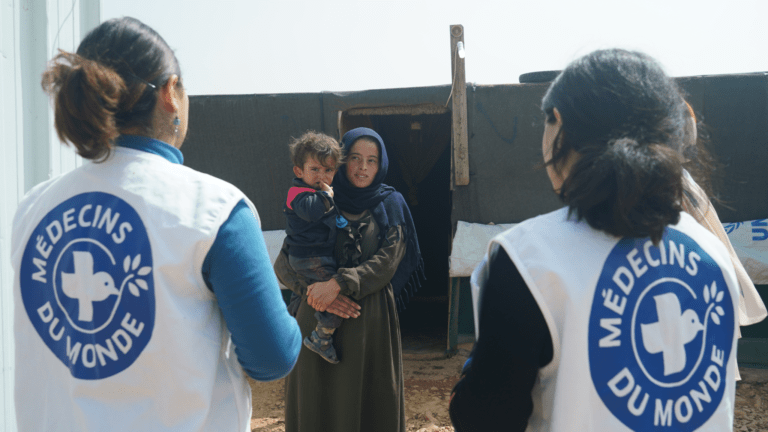
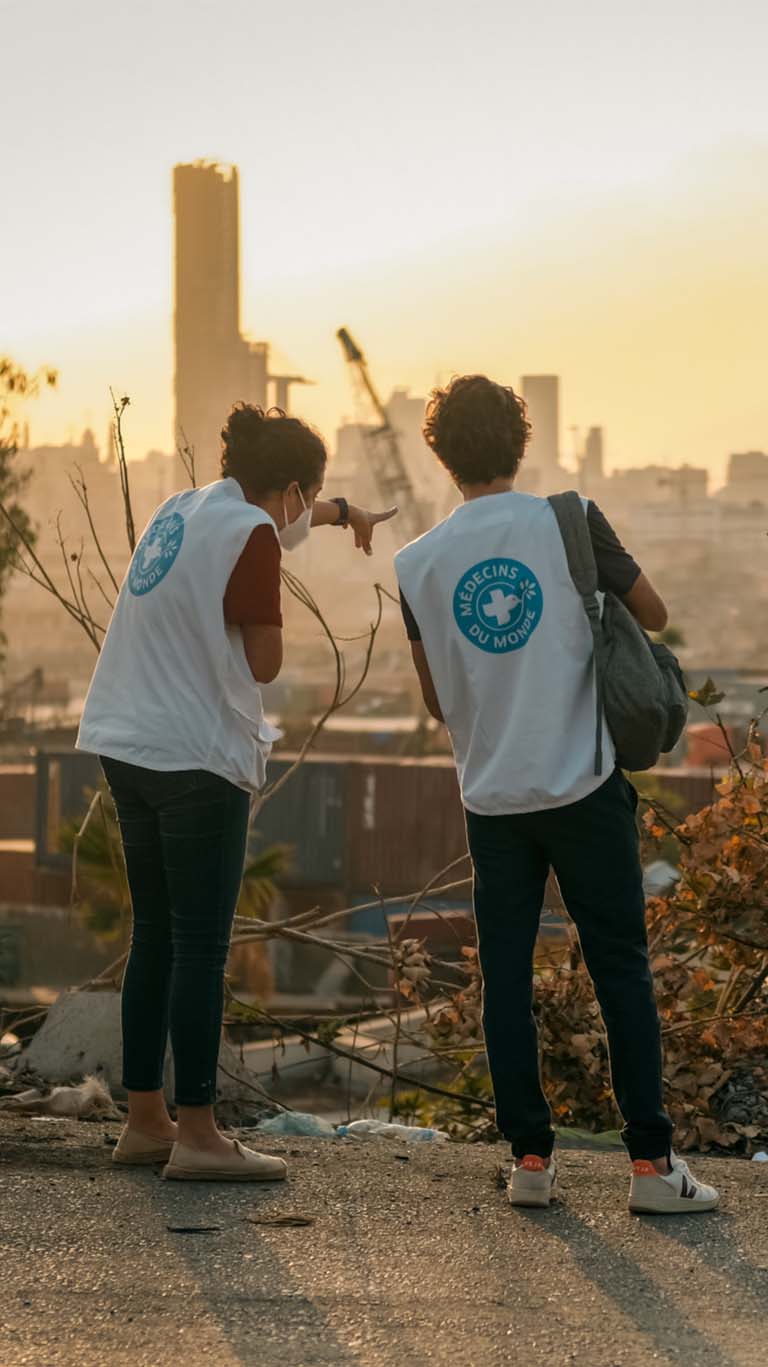
© Nicolas Danicourt

1.5 MILLION

Syrians living in Lebanon

1.3 MILLION

forcibly displaced people

180,000  

Palestinian refugees still living in Lebanon

3.7 MILLION

people in need of humanitarian assistance

Médecins du Monde’s emergency response includes a range of humanitarian assistance programmes. Find out more below about our work and missions in Lebanon.

THE HUMANITARIAN SITUATION IN LEBANON

Lebanon is a country that has constantly endured the impacts of the wars of others: the Israel-Palestine conflict, the war in Syria and the rivalry between Iran and Saudi Arabia. In addition, after the Covid-19 health crisis and the explosion at the port of Beirut in August 2020, Lebanon’s already fragile economy was plunged into crisis.

Since the events of 7 October 2023 and the beginning of Israel’s ground offensive in southern Lebanon in September 2024, the country has been facing its most severe crisis since the war of 2006.

  • LARGE-SCALE POPULATION DISPLACEMENTS

    By 25 November 2024, the conflict had resulted in 3,700 deaths, with around 15,700 people injured, according to the Lebanese Ministry of Public Health. At least 1.3 million people have been displaced, exceeding the 2006 figures. This includes 900,000 internally displaced people, according to the IOM, and over 460,000 people who have fled to Syria since 23 September 2024, according to the UNHCR. At the same time, Lebanon is one of the main host countries for refugees from Palestine and Syria – in 2024, there were 1.5 million displaced Syrians in the country. With a total population of 5.5 million, Lebanon holds the world record for the number of refugees it hosts per head of the population.

    The refugees often live in precarious conditions, in overcrowded group shelters or informal settlements, leading to higher risk of disease and increased health needs. The lack of heating, drinking water and hygiene supplies is particularly concerning during the winter. In 2024, 90% of displaced Syrians were living in extreme poverty and only 20% had a legal residence permit.

  • DAMAGED INFRASTRUCTURE

    Many regions in Lebanon have been bombed, especially in the south of the country, the southern suburbs of Beirut, the Beqaa Valley plains and the area around Baalbek and in the north of the Baalbek region.

    Essential infrastructure was damaged or destroyed, particularly hospitals, water facilities and schools, disrupting access to vital services. Health centres were overwhelmed by the dramatic increase in patients. Medicines for chronic diseases are not always available and displaced people who have lost their homes and jobs often cannot afford to pay for them anyway, which further exacerbates their vulnerability in terms of health.

    In addition to the damage caused by the war, the continued presence of Syrian refugees and the influx of internally displaced Lebanese people have intensified pressure on already limited local resources, aggravating social tensions. As a result, the Lebanese authorities decided to restrict refugees’ access to basic services, in particular by refusing to set up official refugee camps, by blocking their registration or by obstructing humanitarian aid.

Syrian refugees in Lebanon with Cyrus North

OUR HUMANITARIAN MISSION IN LEBANON

Médecins du Monde has been working in Lebanon since 1990. From the beginning of the conflict in September 2024, we have intensified our support for health centres in Beqaa, Tripoli and Baalbek-Hermel Governorates, guaranteeing access to quality health services for vulnerable displaced and host communities.

  • ENSURING PRIMARY HEALTHCARE PROVISION

    In partnership with local organisations, Médecins du Monde supports five health centres by supplying medicines and training for health professionals. Four mobile medical units and rapid response teams have also been deployed to provide emergency medical care in areas with high concentrations of refugees. In 2024, we provided 88,713 primary healthcare consultations.

    We are also supporting teams of volunteers, which include refugees, and 145 people received training in 2024.

  • PROVIDING ACCESS TO SEXUAL AND REPRODUCTIVE HEALTHCARE

    To reduce the numbers of avoidable deaths and to improve the general wellbeing of women and young people, Médecins du Monde works with local organisations to offer sexual and reproductive health services at primary healthcare centres.

    This includes screening for sexually transmitted infections, family planning and antenatal and postnatal care. These activities seek to improve the accessibility, quality and inclusiveness of sexual and reproductive health services for vulnerable women and girls, including those with disabilities. In 2024, we were able to provide around 12,000 consultations.

    Médecins du Monde also provides education sessions on these topics, with 4,644 sessions organised in 2024, and we train community midwives in crisis management.

  • PROVIDING MENTAL HEALTHCARE FOR LEBANESE PEOPLE AND REFUGEES

    Médecins du Monde supports and assists local partners, particularly the organisation Skoun, to provide mental healthcare and treatment in communities living in Lebanon. Mental health consultations and therapeutic follow-up are provided at primary healthcare centres (12,772 in 2024), with more serious mental health problems being referred to specialist services. In addition, specialist services are provided free of charge to people suffering from addiction.

    Médecins du Monde runs awareness-raising sessions for local communities. The aim is partly to reduce discrimination against patients with mental health problems and partly to provide people with information about what services are available near where they live.

    Members of the organisation, including community volunteers and social workers, receive training in basic psychosocial support techniques, stress management and how to identify cases requiring specialist care.

Timeline
  • 1990

    Refurbishment of medical infrastructure damaged during the civil war.
  • 1996

    Emergency assistance for people displaced by the war between Lebanon and Israel. This programme closed in 1998.

  • 2001

    Intervention at the physical and psychological rehabilitation centre for 3,000 former detainees from the Israeli prison in Khiam.

  • 2006

    Projects providing medical, social and legal assistance in around 15 prisons until 2008.

  • 2012

    Access to healthcare programme for Syrian refugees and the most vulnerable members of the Lebanese population.

  • 2017

    Opening of the first mental health unit in a public general hospital in Beirut.