
Myanmar

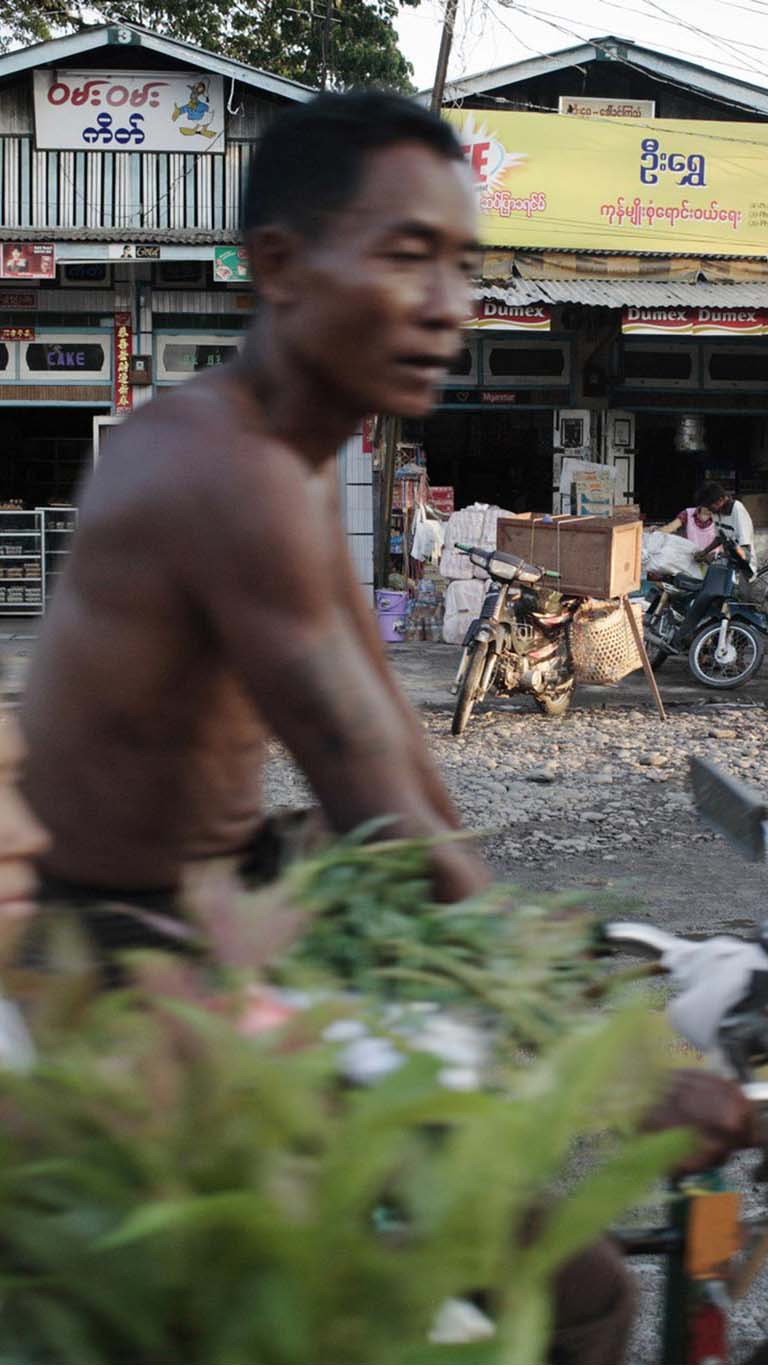
© Sébastien Duijndam

19.9 million

people in need of humanitarian assistance

280,000  

people living with HIV.

1 /3

of the population in immediate need of basic assistance.

Médecins du Monde’s emergency response includes a range of humanitarian assistance programmes. Find out more below about our work in Myanmar.

THE HUMANITARIAN SITUATION IN MYANMAR

Decades of political turmoil, civil unrest and armed conflict between government forces and non-state armed groups have led to large-scale population displacements and an unprecedented humanitarian crisis. This has had far-reaching impacts on the civilian population and the capacity of the healthcare system throughout the country. In 2024, over a third of Myanmar’s population was in immediate need of basic assistance.
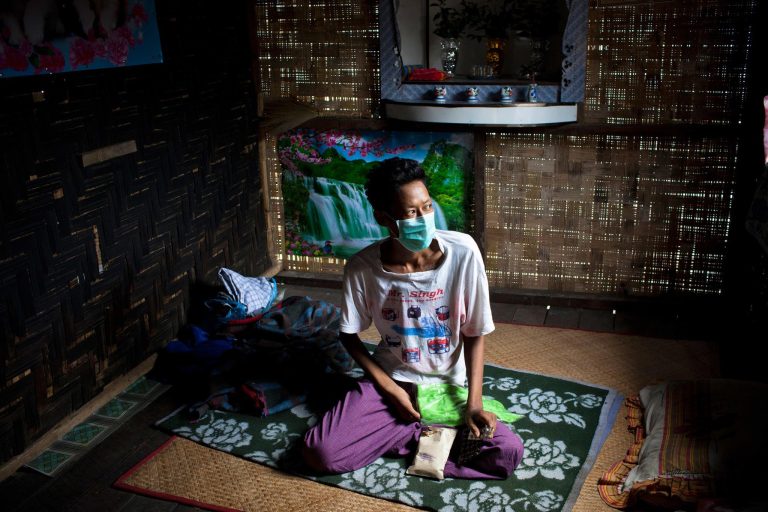
  • One of the worst HIV epidemics in Southeast Asia

    HIV is particularly prevalent among people who use drugs, of whom 35% are infected with the virus. In some places over half of people who use drugs are living with HIV, with 70% of them also infected with hepatitis C. HIV is also widespread among sex workers (14.6%) and men who have sex with men (11.6%).

    Since 2021, Myanmar has been in the throes of a multidimensional crisis which has exacerbated problems with accessing antiretrovirals and treatment. It has made the communities affected even more vulnerable, condemning them to isolation, stigmatisation and limited access to health services.

  • Cervical cancer – the main cause of avoidable death in women

    The primary cause of avoidable death in women in Myanmar is cervical cancer, largely as a result of late diagnosis. Almost every case of cervical cancer is caused by the human papillomavirus (HPV) which is very easily spread through sexual contact.

    Prevalence of HPV among adult women is 11%. Every year over 7,000 women receive a diagnosis of cervical cancer and around 4,500 deaths from the disease are recorded.

    Women living with HIV are six times more likely to develop cervical cancer and the progress of the disease is twice as quick in women with untreated HIV than in other women.

  • Severe flooding in Kachin State

    In 2024, severe flooding displaced 31,000 people in Kachin State following heavy monsoon rains and Typhoon Yag. The floods caused major damage to infrastructure, particularly to roads and the airport in the city of Myitkyina, disrupting aid transport and assistance efforts.

    Access to health services was badly impacted, as many healthcare facilities were damaged and mobile health teams struggled to reach the affected communities.

Réduction des risques Myanmar

© William Daniels

OUR HUMANITARIAN WORK IN MYANMAR

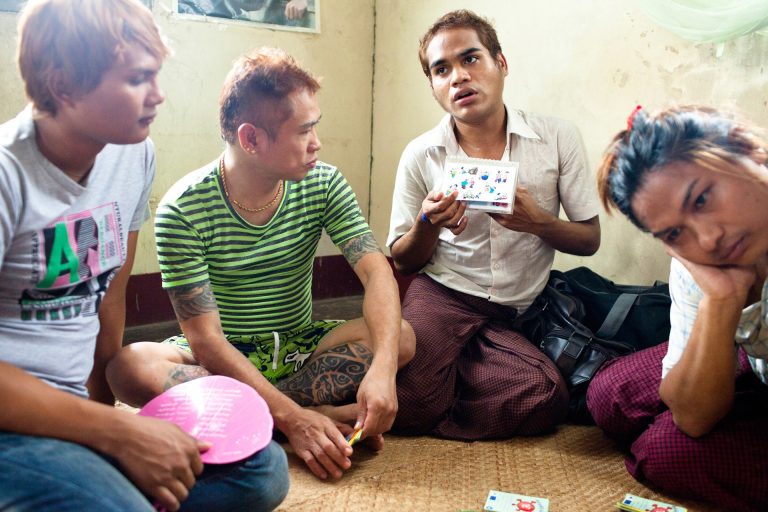
Through its work in Myanmar, Médecins du Monde seeks to promote fair access to health and rights for all. Our harm reduction programmes provide prevention, treatment and support services to key groups, such as sex workers and men who have sex with men in Yangon and people who inject drugs in Kachin.
  • Supporting people who use drugs in Kachin State

    We support a network of 133 community workers who are actively involved with communities of people who use drugs. In 2024, their static and mobile clinics enabled over 11,318 people who inject drugs to continue to access prevention and harm reduction services.

    The main objective of the Médecins du Monde teams was to ensure the continuity of essential medical services for these communities. This involved maintaining HIV testing, counselling and treatment, hepatitis B vaccination, hepatitis C testing and treatment for co-infected people and provision of opioid substitution treatment.

    In 2024, over 5.4 million needles and syringes were distributed, 6,253 people who use drugs were able to receive HIV tests, access to antiretroviral treatment was maintained for over 500 people living with HIV and 2,645 people were able to obtain substitution treatments such as methadone.

    Médecins du Monde also works with local organisations to provide access to appropriate harm reduction services for people who use amphetamine-type stimulants, the second most commonly used drug in the world after cannabis.

  • Helping communities affected by flooding in Kachin State

    Médecins du Monde responded quickly to assist displaced people in temporary shelters, evacuation sites and camps in Myitkyina and the surrounding area.

    Mobile clinics were set up to provide primary care services for around 3,000 people. We organised health education sessions covering topics including diarrhoea, malaria, dengue fever and personal hygiene. We also worked with local leaders and distributed around 4,000 feminine hygiene kits in the camps.

  • Sex workers and cervical cancer in Yangon

    In Yangon, Médecins du Monde is working with sex workers to increase their awareness and knowledge of sexual and reproductive rights and health. The focus is on cervical cancer prevention, family planning and managing sexually transmitted infections.

    We are also working to improve the quality and accessibility of screening, consultations and contraception, as well as better referral mechanisms within the health system for advanced cases, particularly of cervical cancer.

    In 2024, a total of 4,270 sexual and reproductive health consultations were provided for 2,024 people, as well as 949 consultations in connection with sexually transmitted infections. In addition, 706 group education sessions and 2,399 individual counselling sessions involving 9,683 people were organised and seven training sessions were delivered.

Myanmar Réduction des risques

© Wiliam Daniels

  • 32,141

    beneficiaries in 2024.

32,141

beneficiaries in 2024.

Timeline
  • 1994
    First programme for HIV in the state of Kachin. Prevention activities for people who inject drugs.
  • 2000
    Opening of a programme in Rangoon for SW
  • 2002
    Opening of the first healthcare centre. Antiretroviral treatments (ARV) are provided.
  • 2006
    Médecins du Monde is authorised to deliver methadone.
  • 2008
    Cyclone Nargis: emergency intervention in the Pyapon delta. Care provided to women and children is improved.
  • 2013
    Intervention for people displaced because of the Kachin conflict.